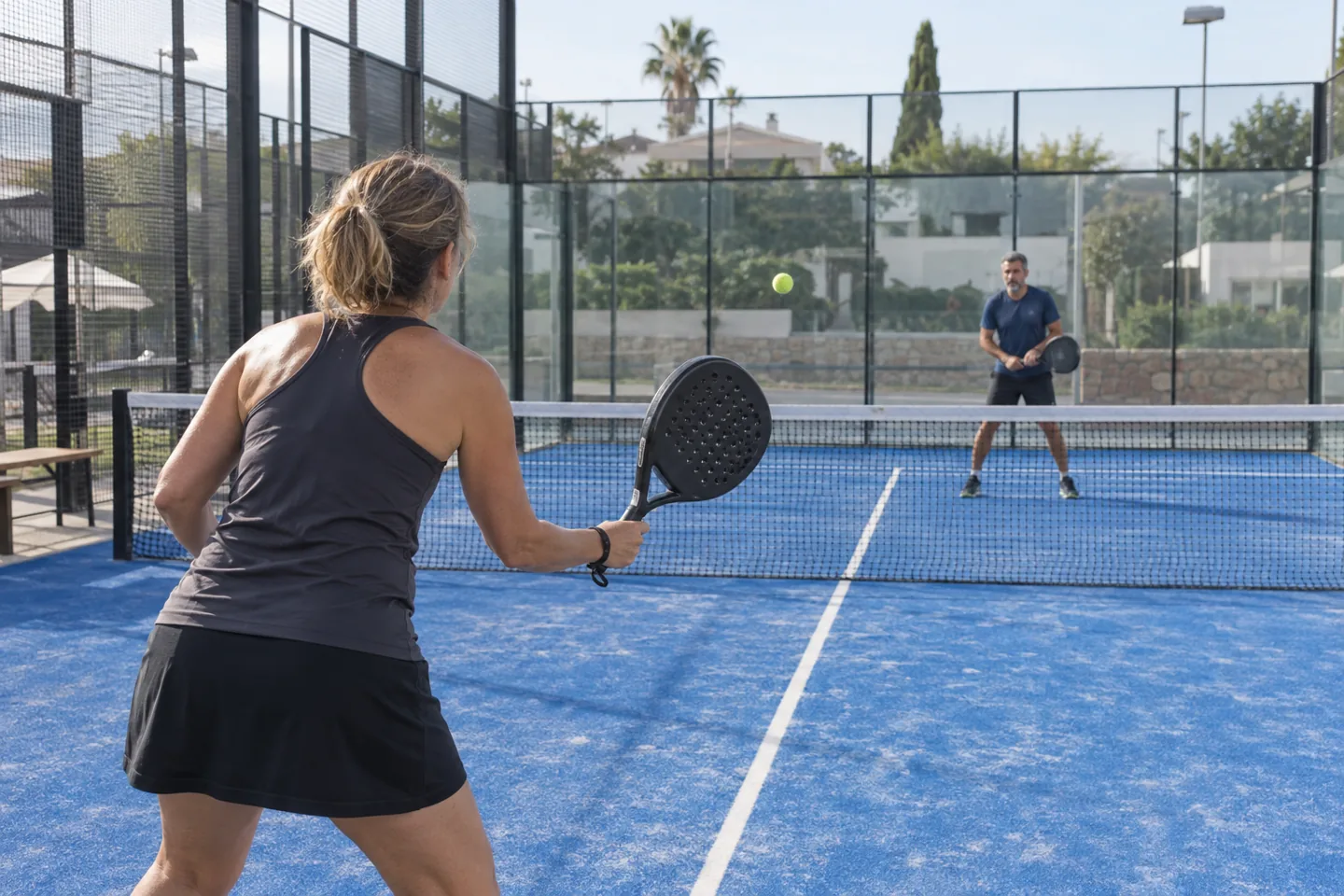
Is padel good for your health?
Padel brings movement, coordination and social play together. You react to the ball, find a rhythm with your partner and have an enjoyable reason to stay active. A suitable level and enough recovery make the first steps more comfortable.
You may know the moment: you booked an hour, enjoyed the rallies, and after the last point someone asks, “When are we playing again?” That is one of the sport’s strengths. Activity earns a place in your week because you look forward to the game and the people. Keeping the amount of play manageable helps you enjoy coming back.
A padel vacation gives you time to explore coaching, matches and recovery. A workation lets you try a week that includes both court time and focused work. You can then adapt what you enjoy to your routine at home.
What you actually practise on court
Short accelerations, side steps and stops alternate with shots and breaks. You read ball trajectories, decide where to stand and communicate in doubles. That combines physical and coordination demands, without making every session equally intense.
One of the pleasures of padel is building the game at your own pace. A calm lesson offers ball contact and familiar movements; experience brings more speed and tactical challenges. Stops and changes of direction also load muscles and joints, so build up gradually and use suitable footwear.
| Element | Practical value | Make it work for you |
|---|---|---|
| Movement | An enjoyable reason to become active regularly. | Match the intensity and breaks to your experience and how you feel. |
| Coordination | Ball flight, racket contact and positioning are practised together. | Practise one clear skill and notice your progress on court. |
| Doubles | Arrangements and shared learning may help you keep playing. | Find people with a similar level and an approach you enjoy. |
| Competition | A clear reason to play and a goal to work towards. | Choose a stimulating level of play and allow recovery between matches. |
What research tells us about padel’s potential
A 2022 review of padel and health discusses its potential for fitness and regular physical activity. That perspective makes the sport relevant to longevity and active living: enjoying the game gives you an appealing reason to make movement a regular part of life.
A 2026 overview of research from 2022–2025 shows that much of the work on padel still focuses on performance and competition. Its health potential offers interesting questions for further research. These papers do not yet provide direct long-term evidence of increased life expectancy from padel.
Playing with other people is also part of the appeal. The review of padel, pickleball and wellbeing covers 14 studies involving 1,403 people, with results varying across sports and settings. For recreational players, an enjoyable group and learning together are sensible priorities; the findings do not establish a treatment for stress or loneliness.
Another line of research concerns movement and the brain. A BDNF study involving 24 trained players observed an acute response in this growth factor among the women after simulated padel competition. It offers an interesting starting point for further work, while leaving longer-term cognitive benefits to be established.
Prepare well and keep enjoying padel
After a long break, the game may feel familiar before your muscles and tendons have adapted to the amount of play. Unfamiliar overhead shots, stops and turns, and sometimes heat add to the load. A demanding match, strength session and another match on the same day are not three independent activities.
The 2023 injury review identifies areas including the elbow, knee, shoulder and lower back. The evidence is limited and cannot be used to calculate your personal injury probability.
Start with a manageable amount and an introduction to positioning, wall play and controlled shots. Footwear should suit the surface and sideways movement. If you are unsure which equipment or activity level is appropriate, ask a qualified professional.
Pain is not a training challenge
Persistent or worsening pain, swelling or reduced function calls for a break and professional assessment, not a push for better performance. Severe acute symptoms, chest pain, fainting or unusual breathlessness require prompt medical help.
Start in a way that makes you want to return
Start with a session that suits your level. A coach can help you understand positioning, wall play and controlled shots. Well-matched doubles gives everyone a chance to enjoy a rally, build confidence and choose something to practise next time.
A sensible start leaves space between sessions. After the first one, note which movements were unfamiliar and how you feel the following day. That is a planning aid, not a diagnosis. If you are tired, the optional match can become a walk or an afternoon off.
The coach finder and player finder help you look for options. Describe your level and ask about a calm introduction, group size and the balance of drills and matches. Those details help turn an arrangement into a session that suits you.
For work away from the court, read strength, endurance and mobility for padel. The recovery guide covers what follows a game. The holiday training plan brings technique, matches and breaks together.
Let a trip be the start of your padel routine
A padel vacation combines play and coaching with time to unwind. A padel workation includes dedicated work blocks. Both give you an opportunity to play with a group and discover a balance of activity and downtime you enjoy.
What you take home can be quite tangible: a more confident first shot, someone new to play with or enthusiasm for a regular weekly game. Those small beginnings can turn a memorable trip into something that continues at home.
Prepare for your first session
Three conversation starters for a coach or group. No personal health details are needed.
Frequently asked questions
Is padel gentle on joints?
Not automatically. Stops, turns and shots load different structures. A suitable level and manageable amount matter more than a broad label.
Can I go straight into matches after a long break?
A gradual return and professional advice where needed are more sensible than several intense matches. Your individual starting point matters.
Can padel be a good break from everyday demands?
Yes, playing and spending time with others can feel like a welcome change of pace. Choose a level and group you enjoy. Preferences for relaxed games or competition vary, so this does not amount to a guarantee of stress reduction.
Do I need a coach?
A coach can make the rules, positioning and movements easier to understand, especially at the beginning. That helps you enjoy rallies and keep practising with a suitable goal. Personal health questions belong with appropriately qualified professionals.
Notes
General information about movement and travel, not individual medical advice. Sources are linked alongside the relevant statements. Updated 13 October 2026.