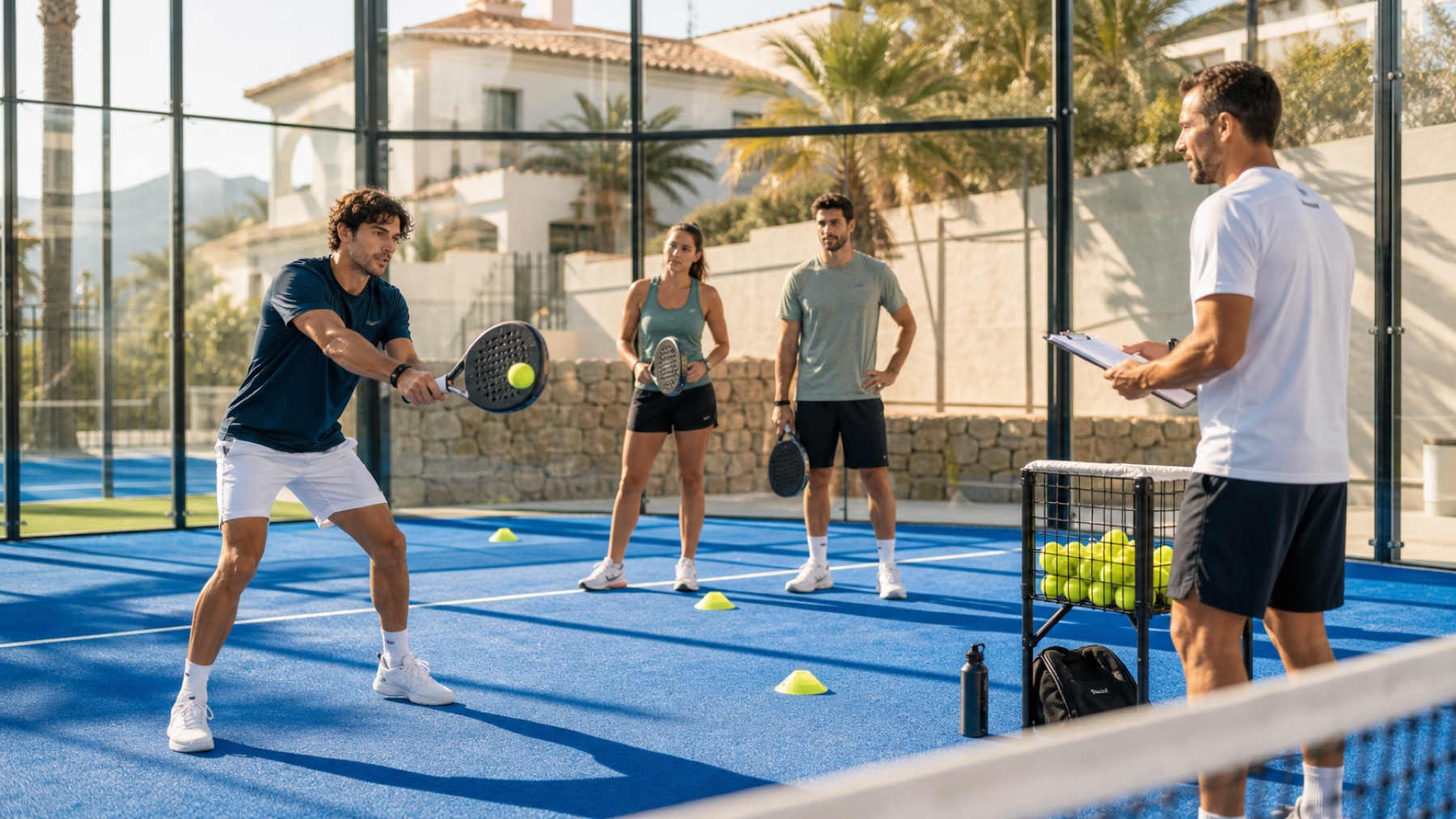
Many Padel trips fail not because of a lack of motivation, but because of too much unplanned stress. Training in the morning, a match in the afternoon, an Americano in the evening: that sounds like progress, but it quickly ends in tired legs, aching shoulders and poor technique.
01The short answer
A good Padel training plan for vacation combines technique, tactics, match play, fitness and regeneration. For beginners, three to four well-led sessions are often enough. Intermediate players can use four to five court slots. Advanced players benefit from more match analysis, point building and conscious load management.
The most important point: A training week is not a long-term tournament. You will get better if you repeat a few things in a targeted manner, test them in matches and give your body time to process them.
Plan the week from the goal, not the court calendar.
Ask first: Do you want to stabilize your technique, gain match practice, get fitter or prepare for a tournament? Then you distribute units, not the other way around.
02The training principles
A good week has three types of stress: clean repetition, realistic game situations and deliberately easy days. These building blocks are often mixed, especially on vacation. Then you train a lot, but not precisely enough.
Technique over speed
Serve, volley, lob, glass and the basic idea of Bandeja need controlled repetitions. Power only comes when the shot is reproducible.
Match play as a test
Matches are not just playing time. Use them to test one thing: better net position, longer lobs, smoother serves, or clearer communication.
Regeneration as part of the plan
Your body adapts between sessions. Sleep, fluids, mobility and a real day off are not time wasted.
Heat is also crucial for a vacation trip. Outdoor training in Spain or Portugal should, if possible, take place in the morning or late afternoon. In the midday heat, technology quality is often poorer and fatigue increases unnecessarily.
03What you can realistically improve per level
Beginner
Beginners can bring a lot of order into the game in one week: serves, groundstrokes, simple volleys, first glass situations and positioning. The goal is not to play spectacularly. The goal is to hit the ball cleanly more often and to become less hectic.
Intermediate
At intermediate level, controlled variation matters most. A reliable bandeja, better lob length, net position, tempo control and clear partner communication usually bring more than a new power shot. Those who get better here make fewer easy mistakes and win the right court zone more often.
Advanced
Advanced players need less volume and more quality: video analysis, match patterns, transitions from defense to attack, error reduction and decision-making under pressure. The question is: Which situations cost you points and how do you train exactly these situations?
| level | Weekly focus | Don't overdo it |
|---|---|---|
| Beginner | Contact, rules, serve, simple position | too hard hits and long matches |
| Intermediate | Bandeja, lob, net position, point construction | too many new techniques at once |
| Advanced | Match patterns, video, pressure phases | too little recovery between intense sessions |
04Three sensible weekly models
The right plan depends on whether you really want to train, whether vacation is the priority or whether you work part-time. These three models work best in practice.
Relaxed training vacation
Three court sessions, one social match, lots of free time. Ideal for beginners, couples and anyone who wants to incorporate Padel into their vacation without dominating the week.
Focus week
Four to five units, including two technical blocks, a tactical block, a match play and an easy regeneration day. This is the best area of progression for most players.
Workation plus Padel
Three to four sessions after work or on weekends. The plan must protect work energy: short technique, a match, a longer training day.
If you plan a week in Málaga, training can be combined particularly well with Workation and community. You can find out more about this in the guide Padel training in Málaga and at Elevation Padel Workation.
05Book training: group, private lesson or camp?
Group training is cheaper, more social and closer to real doubles. Private lessons are better if you want to quickly correct a technical error. Camps give you the most structure, but they also take away your freedom. A mix is often ideal: a private technique check at the beginning, followed by a small group and match play.
| format | Strength | Pay attention |
|---|---|---|
| Private lesson | precise feedback, quick correction | Don't just train in isolation all week |
| Small group | Closeness to the game, changing partners, social fit | maximum 4-6 players per court |
| Camp | clear structure, several days, often match play | Level groups, breaks, group size |
| Club course | flexible and often cheaper | less individual control |
At outdoor clubs, you should ask about times, shade, rental equipment, shoes and balls. Good coaches not only explain shots, but also give you one to three specific corrections that you will recognize in the match.