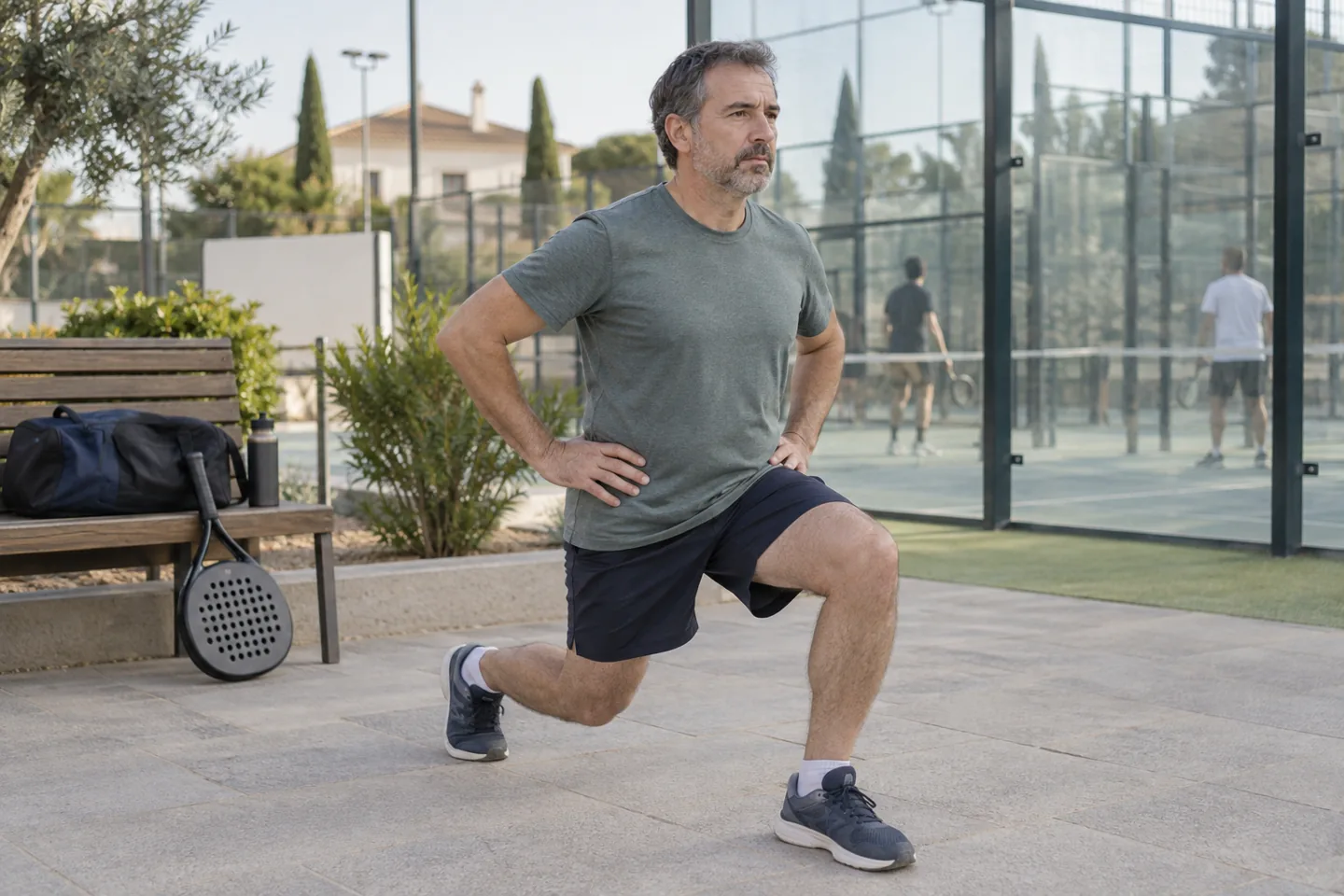
Enjoy your padel with well-rounded fitness
A useful fitness framework combines court practice with strength, endurance and mobility. Every session need not be hard. Choose manageable tasks and distribute the demands so that you can use what you learn in a match.
If your footwork becomes untidy in the final set, another shot drill is not automatically the answer. Endurance, a crowded day or positioning could be involved. Start with a specific situation you can observe rather than simply training more.
A padel vacation gives you time to try different elements. A workation combines them with a dependable work schedule. It is a chance to discover movement you enjoy and would like to make part of your week at home.
Four elements, four different jobs
Strength: moving and stopping with control
Targeted strength work can complement the demands on your legs, trunk and upper body. Professional guidance helps choose suitable versions of squat or lunge patterns, pulling movements and controlled trunk work. Technique comes before adding more weight. A general guide cannot assess the right execution for you.
Endurance: movement beyond individual rallies
Padel includes breaks and changing intensity. Walking, cycling or other familiar activities add steadier movement. You need not add interval training every day. Start with an amount that you can regularly fit in.
Mobility: room for movement
A short, calm mobility routine can prepare you for familiar movements. It should feel controlled, not push into painful positions. Mobility work neither replaces strength nor guarantees freedom from injury.
Court practice: bring fitness into the game
Practise starting, positioning and returning through a clear drill, then in a gentle rally. The aim is not maximum speed in every exercise but being well placed for the next ball. Coaching connects movement with tactics.
A weekly framework you are allowed to change
This is a recreational example, not a prescription. Beginners or people returning after a break may do considerably less. Medical conditions or symptoms call for individual professional advice.
| Day | Focus | What to notice |
|---|---|---|
| Monday | Controlled court practice | One technical goal rather than many unfamiliar tasks. |
| Tuesday | Appropriately guided strength work | Sound execution and a manageable amount. |
| Wednesday | A walk or time off | Do not quietly turn it into a missed hard session. |
| Thursday | A suitably matched game | Look for Monday's technical goal. |
| Friday | Gentler aerobic movement | A familiar activity, not another competition. |
| Weekend | Strength and downtime according to experience | Consider other demands and sleep. |
Swap days or remove a session. Additional matches, excursions or long working days do not mean you must also keep the entire example plan. The recovery guide helps you make downtime deliberate.
Padel and varied movement work well together
The WHO recommendations include aerobic movement and muscle strengthening. Adults are advised to do 150–300 minutes of moderate or 75–150 minutes of vigorous activity weekly, plus strengthening on at least two days. This is guidance, not a personal number of court hours.
A 2026 observational study found an association between long-term activity variety and lower mortality, lending support to a varied, active lifestyle. Padel was not included and the association does not establish cause; the April correction clarifies jogging and running definitions.
Padel can remain your favourite sport. Add suitable strength exercises and another activity you enjoy, such as cycling or walking. That combination creates variety around a regular game you look forward to. The longevity guide explores the longer-term perspective.
Notice progress without testing constantly
Choose one feature for two or three weeks: returning to an organised position after a lob or playing a calm return, for example. Discuss with a coach how to recognise it in a match. You do not need daily video or a complete performance assessment.
Also notice whether the schedule fits your life. A plan you repeatedly abandon is not automatically a personal failure. It may need fewer commitments, shorter journeys or a more suitable group.
The coach finder helps you look for instruction and the player finder for suitable games. The holiday plan combines technique and matches, while padel and health puts the demands in context.
For playing, time off and new connections, explore the vacation. If regular work blocks belong in the week, explore the workation. Either way, leave breathing room.
One focus for next week
Choose a planning task, not another obligation.
Frequently asked questions
Should every fitness session be intense?
No. Gentler movement, controlled practice and days off have a place. Total demands matter more than fitting in as many hard sessions as possible.
Does padel replace strength training?
Not automatically. Targeted strengthening and padel make different demands. A suitable framework combines them around experience and daily life.
How can I notice progress?
Observe one specific feature in matches and check whether your weekly rhythm is sustainable. Constant exhaustion is not a necessary sign of success.
What if I have pain?
Pause and seek professional assessment for persistent or worsening symptoms rather than continuing to follow a general weekly plan.
Notes
General information about movement and travel, not individual medical advice. Sources are linked alongside the relevant statements. Updated 13 October 2026.