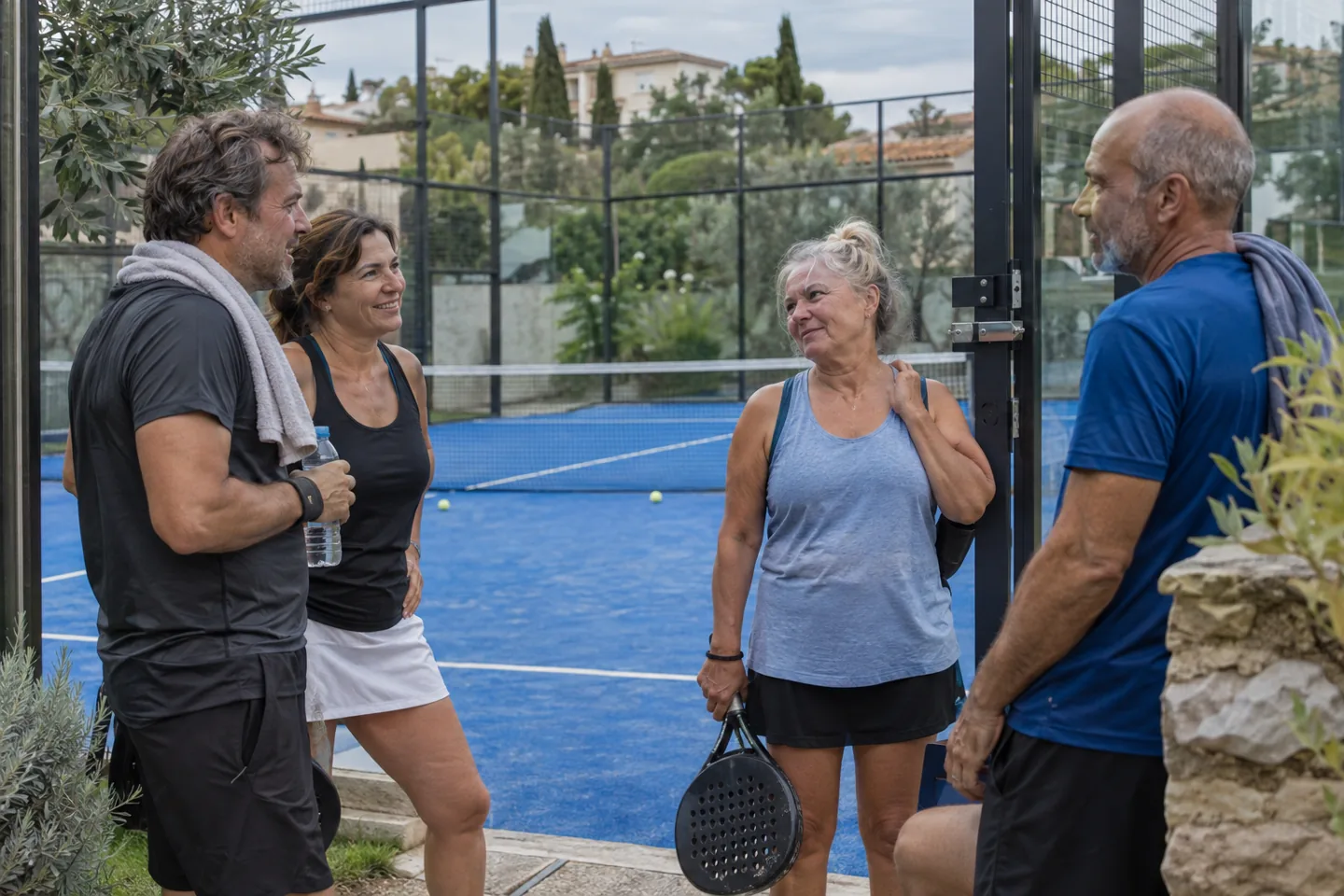
Why padel belongs in the longevity conversation
Padel brings together movement, coordination and people you look forward to seeing again. For longevity, a particularly appealing prospect is turning that enjoyment into a regular habit. Long-term studies of tennis and other racket sports show encouraging associations with longer lives; comparable lifespan data for padel players are still needed.
Longevity means living longer; healthspan is the time we spend in good health and with independence. In everyday life, those ideas become tangible through movement, learning and relationships. Padel can provide an enjoyable setting for all three, alongside enough sleep, suitable nutrition and good healthcare.
A padel vacation gives you time to experience that combination: playing, learning together and unwinding afterwards. A padel workation brings movement and company into a week with dedicated work blocks. The trip becomes especially worthwhile when you take a habit home with you.
What are racket sports?
These games involve returning a ball or shuttle into an opponent's playing area. The wider family of return games also includes sports without rackets, such as volleyball. Here we focus on racket sports you might choose for recreation.
Technique, pace and format vary considerably. A relaxed doubles session is very different from competitive squash. Even within one sport, the level of play changes the demands.
| Sport | What to expect | Research at a glance |
|---|---|---|
| Tennis | Singles or doubles; longer runs and varied shot heights. | Encouraging observational findings on life expectancy and mortality. |
| Badminton | A shuttle, quick changes of direction; singles or doubles. | Included in the Oja and Schnohr studies. |
| Squash | Play against a front wall, often with intense rallies. | Grouped with other racket sports in Oja's analysis. |
| Table tennis | A compact playing area, reaction and precision. | No specific lifespan effect can be inferred from these studies. |
| Padel | Usually doubles, glass walls and short runs with frequent stops. | Fitness and activity are being studied directly; long-term lifespan data are still needed. |
| Pickleball | A small court, equipment and rules different from padel. | Wellbeing findings cannot simply be transferred to padel. |
The encouraging findings from long-term racket sport studies
In a widely cited study, Oja and colleagues (2017) followed 80,306 adults. Participation in tennis, badminton or squash was associated with a 47 percent lower relative risk of death during follow-up. That is an encouraging finding for this sporting family. The figure does not describe extra years of life or a result for padel.
Racket sports also stood out in the Copenhagen City Heart Study (2018), involving 8,577 people. Compared with the inactive group, estimated differences in life expectancy were 9.7 years for tennis and 6.2 years for badminton. These observational findings describe associations, not guaranteed gains or evidence about padel.
The studies offer an interesting context for padel, which also combines physical activity, tactical decisions and playing with others. They cannot establish how much each ingredient contributes to longevity, and lifestyle and social circumstances may also play a part. The practical invitation remains encouraging: find an activity you enjoy enough to keep returning to.
Four questions for a health headline
Who took part? Which sport was studied? Over what period? Was the outcome a blood marker, wellbeing or actual long-term mortality? Those questions help keep an interesting result in proportion.
Build a varied, active week around padel
A 2026 BMJ Medicine study of 70,725 women and 40,742 men linked long-term activity variety with lower mortality after accounting for total activity. Padel was not included. An April correction clarifies the definitions of jogging and running.
Padel can be the session you build your active week around. Walking or cycling adds steadier movement, while strength training provides a different challenge. Together, they create variety that fits both your game and everyday life. The padel fitness guide helps you put the pieces together.
The WHO recommends 150–300 minutes of moderate or 75–150 minutes of vigorous activity each week for adults, alongside muscle-strengthening activity on at least two days. Time booked on court is not automatically all vigorous activity: breaks, rallies and your effort affect the load.
Movement, enjoyment and connection on one court
Reading a lob, moving towards the net together, laughing at an unexpected point: padel engages your body and attention while creating shared experiences. Doubles turns exercise into an arrangement with other people. Looking forward to both the game and the company gives you a reason to put the next session in your diary.
A review of padel and health describes its potential for fitness and regular activity. Evidence on wellbeing is less clear: the 2025 review of padel and pickleball brings together varied studies, and positive pickleball findings cannot simply be applied to padel.
A suitable level, good instruction and recovery help make playing sustainable. They give you room to get used to new movements and longer matches gradually. Read padel and health for advice on getting started, and recovery after playing for the time between sessions.
How this connects with the Elevation Effect
The Elevation Effect brings together four existing elements: sport and cognitive activation, habits, personal development and community. In everyday life these can become simple actions: a suitable game, a regular date, a manageable learning goal and people you enjoy playing with.
The link between movement and the brain is also intriguing. A small padel study on BDNF observed an acute response in this growth factor among trained women after play. The finding raises a research question, rather than demonstrating better work performance or extra years of life. Padel can still offer an engaging change of pace between movement, concentration and shared experience.
Start with a realistic commitment rather than a perfect week. The player finder offers ways to connect, and the coach finder helps you look for instruction. After a trip, the training plan can help you build a routine at home.
For playing, time off and community, explore the vacation. If you want to include work blocks, choose a workation. Both give you room to discover the enjoyment of regular activity and head home with a plan for your next game.
Your next small routine
Choose a next step. These are practical organising ideas, not a health assessment.
Frequently asked questions
How does padel fit into a long, active life?
Padel combines regular movement, coordination and time with other people. That can make it an appealing part of an active lifestyle over the years. Existing studies do not establish extra years of life from padel; the well-known long-term findings concern sports including tennis and badminton.
Which racket sport is healthiest?
These studies do not offer a universal ranking for individuals. Enjoyment, access, suitable demands and regular participation matter when choosing.
How do longevity and healthspan differ?
Longevity refers to living longer; healthspan refers to time spent in good health and with independence. Many factors influence both.
How can I build an active routine around padel?
Make padel a regular fixture and add suitable strength exercises, walks or cycling. That combines different types of movement with something you look forward to. Recovery helps you keep the routine sustainable.
Notes
General information about movement and travel, not individual medical advice. Sources are linked alongside the relevant statements. Updated 13 October 2026.