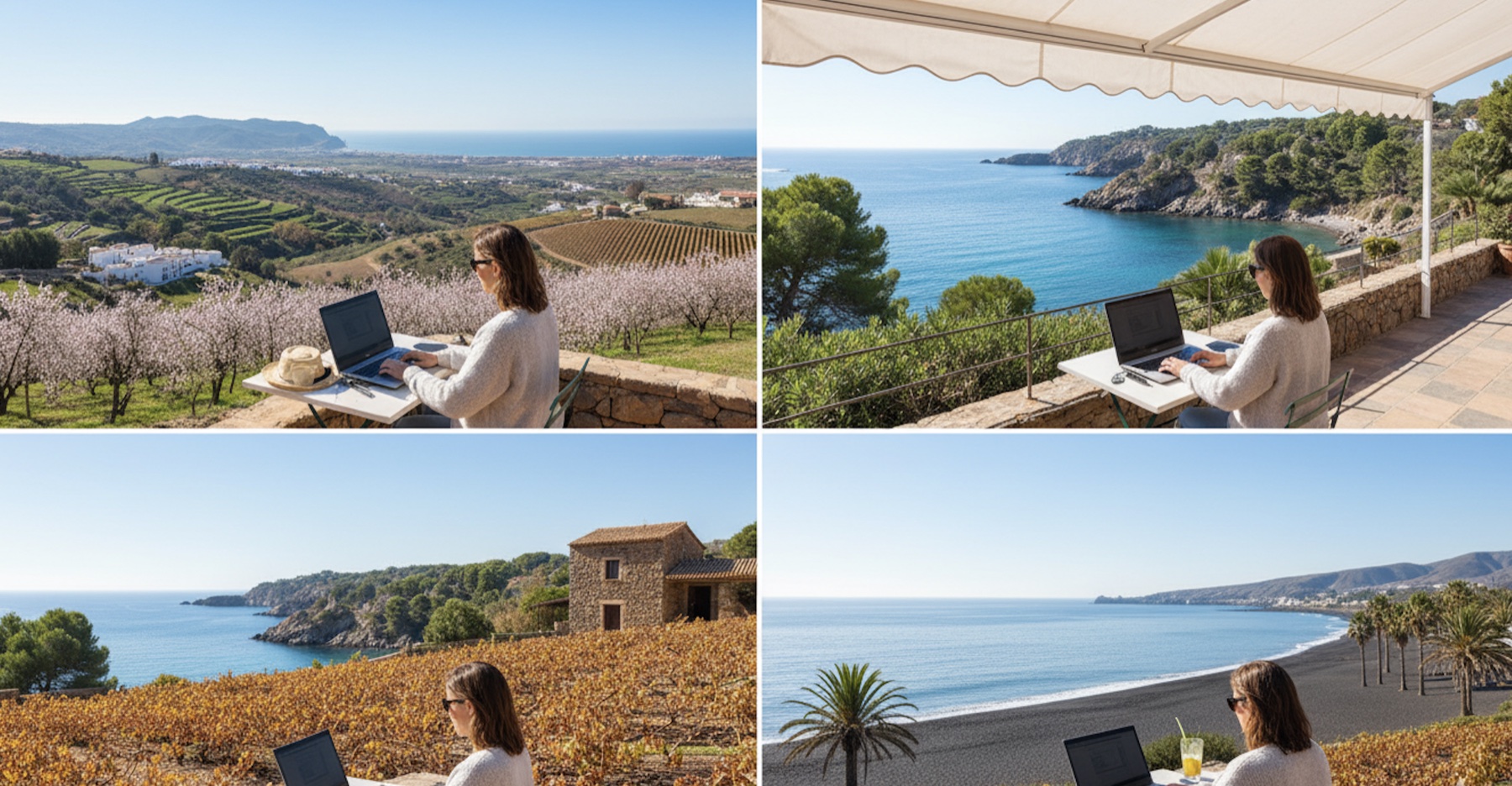
Spain works as a workation destination almost all year round, but not every region suits every season. This guide organizes the mainland, coasts, islands and cities by climate, everyday life and remote work fit.
Spain offers attractive conditions for digital nomads all year round - whether mild winters, spring-like island climates or fresh Atlantic air in midsummer. In this guide we show which regions are particularly suitable for a workation at which time of year. Criteria: pleasant temperatures for working, access to the sea to cool off, and stable infrastructure for remote work.

01Spring (March – May)
01Recommended regions:
- Andalusien (e.g. Málaga, Seville)
- Canary Islands (e.g. Tenerife, Gran Canaria)
- Balearic Islands (e.g. Mallorca)
- Valencia region (e.g. Valencia, Alicante)
In spring the temperature in southern Spain and on the islands is mild 18-24°C. The tourist centers are not yet overcrowded, coworking spaces are opening again and the beaches are already inviting you to swim. The Canary Islands in particular are considered the “region of eternal spring”.
01Advantages:
- Stable weather, lots of sun
- Good flight connections and still affordable prices
- Community activities start again
01Disadvantages:
- In southern Spain it can be over 25°C from May onwards

02Summer (June – August)
02Recommended regions:
- Northern Spain (e.g. Galicia, Cantabria, Basque Country)
- Canary Islands
Summer can be unbearably hot in the south and in many cities (e.g. Seville, Madrid). If you want to work productively, you should move to the Atlantic coast or the Canary Islands. In Galicia or Cantabria it stays pleasantly cool at 17-22°C, with lots of nature and a fresh breeze.
02Advantages:
- No extreme heat – good for working
- Access to the sea to cool off
- Less crowded than Mediterranean coasts
02Disadvantages:
- Rainier regions (Northern Spain)
- Canary Islands more expensive in summer

03Autumn (September – November)
03Recommended regions:
- Andalusien
- Valencia-Coast
- Balearic Islands
- Canary Islands
Autumn is ideal for a Workation in many parts of Spain. In the south and on the islands it is still warm (23-27°C in September), the sea is still great for swimming and the tourist peak season is over. Ideal for peace and good working conditions with a view of the sea.
03Advantages:
- Warm weather, but no heat
- Lower price level than in summer
- Many digital nomads arrive here
03Disadvantages:
- Regions like Valencia or Murcia can be affected by autumn rains
04Winter (December – February)
04Recommended regions:
- Canary Islands
- Costa del Sol (e.g. Málaga, Nerja)
- Costa Blanca (e.g. Alicante, Benidorm)
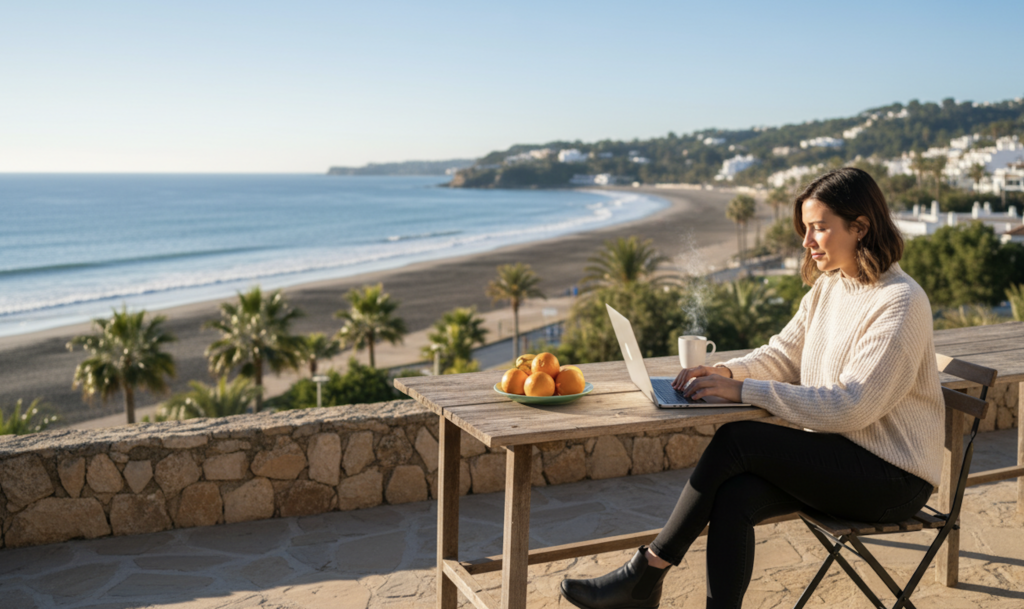
While northern Europe is freezing, in the south of Spain or on the Canary Islands you can enjoy temperatures of around 18-21°C - ideal for working and living outdoors. The sun shines almost every day, especially on the Canary Islands, and internet and coworking are well developed in many places.
04Advantages:
- Mild climate, even in January
- Good flight connections from Germany
- Many events and nomad meetings
04Disadvantages:
- Individual regions (e.g. Mallorca) can be cooler and wetter
Spain is an ideal Workation destination at any time of year – if you choose the right place. In spring and autumn, mainland Spain scores with mild temperatures and a Mediterranean flair. In summer many people head to the cooler north or to the Canary Islands. And in winter, the Canary Islands and the southern coast of Europe are perfect retreats with sun, sea and stable WiFi. In this way, work can be optimally combined with quality of life. If you want to combine Workation and sport, you can find it at Elevation Workation suitable inspiration for an active remote work stay.